Contact Us
Call Us


Executive Travel


9 Days
Classical Packages
Egypt
Experience the timeless wonders of Egypt on this immersive 9-day journey that blends ancient history with modern discoveries. Begin in Cairo with visits to the iconic Pyramids of Giza, the Great Sphinx, and the spectacular Grand Egyptian Museum, home to the world’s most important collection of Pharaonic treasures. Continue exploring Egypt’s vast heritage at Saqqara, historic mosques, and vibrant bazaars.
Travel south to Luxor to embark on a relaxing Nile Cruise, discovering the legendary temples of Karnak and Luxor, the Valley of the Kings and Queens, Queen Hatshepsut’s magnificent temple, and the Colossi of Memnon. Sail along the Nile to Edfu, Kom Ombo, and Aswan, visiting the Temple of Horus, Philae Temple, the Unfinished Obelisk, and the Aswan High Dam.
Accompanied by expert Egyptologist guides and enjoying carefully selected accommodations, this program offers a perfect balance of culture, comfort, and unforgettable experiences along the Nile—bringing Egypt’s ancient civilization vividly to life.
04 Night's Cairo - 04 Night's Nile Cruise Including Grand Egyptian Museum (GEM).
Welcome to Egypt! Upon arrival Your tour begins when you are greeted by our representative Executive Travel who will assist you through immigration and customs formalities. After you have collected your luggage, he will then take you, in our deluxe vehicle, to your Cairo hotel and overnight.
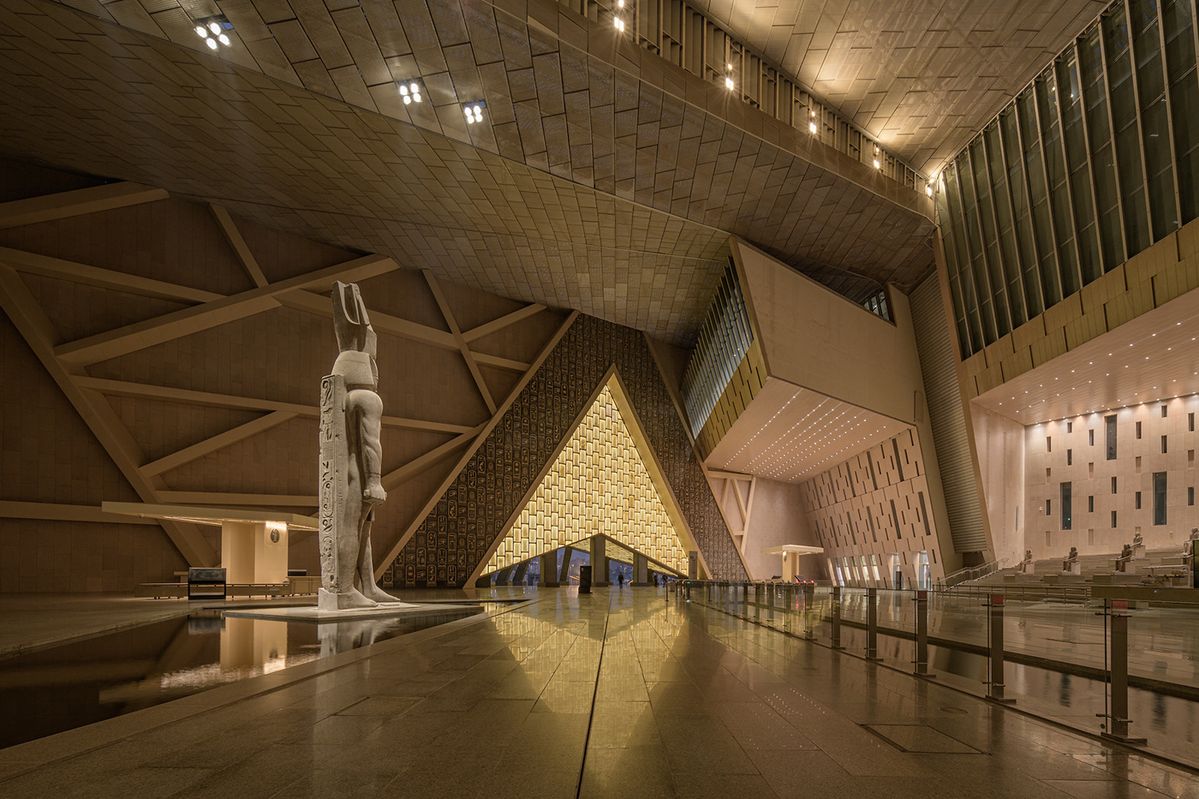
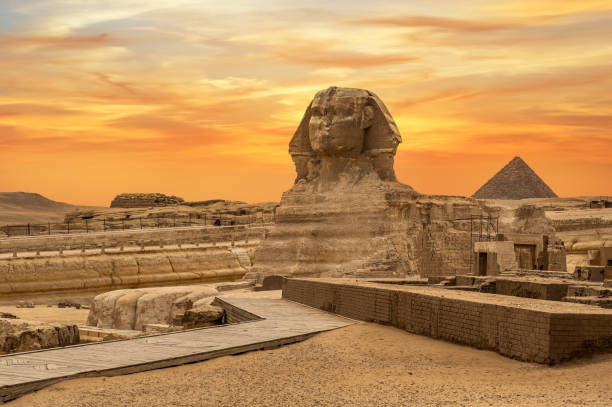
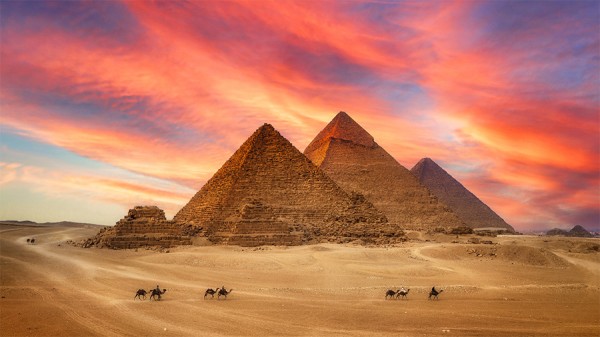
After breakfast, you will meet you Egyptologist guide in the hotel lobby. Begin by exploring the desert antiquities dating back to the beginning of a civilization that arose over 5,000 years ago. You will venture through the desert to visit some of Egypt’s oldest sites. First, go to the Pyramids of Giza. Nothing evokes the long and intriguing history of Egypt as powerfully as the pyramids. Rising from the desert, Khufu (Cheops), Khafra and Menkaura symbolize the enigmatic tug of Egypt in our imaginations. The Great Pyramid of Cheops immortalizes the son of Sneferu and Hetephres. Though little is known about this pharaoh, his pyramid is the largest of the three and is comprised of 2.3 million stone blocks, each weighing an average of 2.5 tons., the colossal statue of the Great Sphinx, which as stood guard over the pyramids for millennia. Carved from an outcrop of rock, the Sphinx remains the ultimate symbol of Ancient Egypt with its lion’s body and human head. After exploring the Giza Plateau, continue to the nearby Grand Egyptian Museum (GEM) – the largest archaeological museum in the world. Here, you will discover over 100,000 artifacts spanning Egypt’s ancient history. Highlights include the complete treasures of King Tutankhamun, displayed together for the first time, and the impressive colossal statue of Ramses II that welcomes visitors at the museum’s entrance. Enjoy time to explore the museum’s modern galleries and exhibitions before returning to your hotel for overnight. Meals: Breakfast & Lunch.
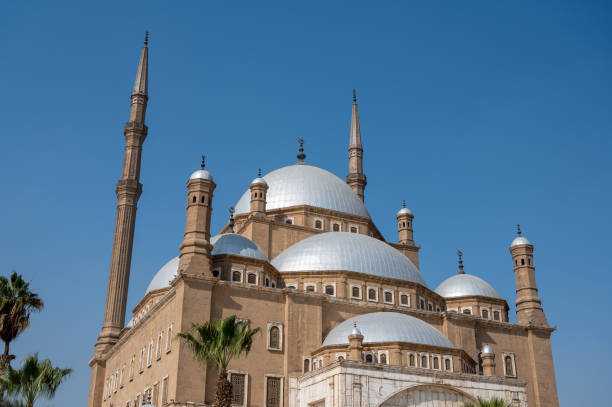
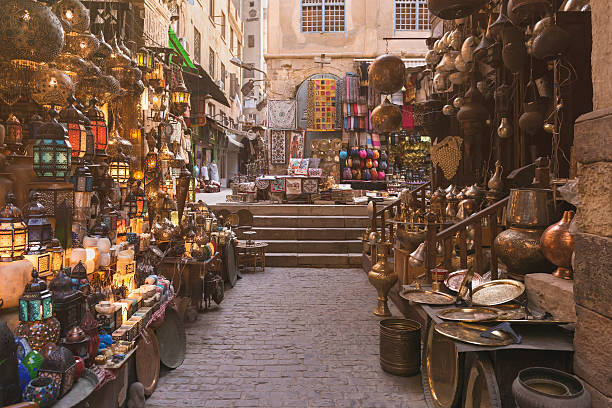
After breakfast, you will meet your guide to Begin your introduction to Sakkara. The necropolis at Sakkara is where King Zoser’s Step Pyramid was built. This vast site in the heart of the desert plateau is the largest necropolis in Egypt. Extending for almost five miles, the complex forms a collection of pyramids, temples and tombs that is fundamental to understanding the history of ancient Egypt. You will then visit The Alabastre Mosque of Mohamed Ali, the largest structure built during the first half of the 19th century. Counting to visit the most famous Bazaar in the Middle East Khan El Khalili Bazaar. Meals: Breakfast & Lunch.
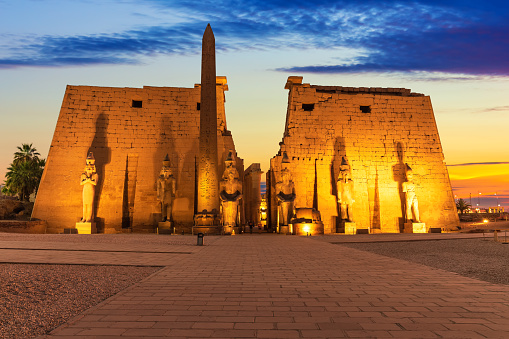
After breakfast, Today you will be transferred to the airport to take your flight to Luxor, Later this morning, you will be transferred to the river to begin your Nile cruise After check-in, enjoy lunch on board. This afternoon, you visit the East Bank with its fabled Karnak Temple and Luxor Temple. The temple of Luxor is close to the Nile and parallel with the riverbank. King Amenhotep III, Who reigned 1390-53 BCE, built this beautiful temple and dedicated it to Amon-Re, king of the gods, his consort Mut, and their son Khons. This temple has been in almost continuous use as a place of worship up to the present day. It was completed by Ramses II. Towards the rear is a granite shrine dedicated to Alexander the Great. Osiris. A20-meter/66-foot high, mud brick enclosure wall, surrounded all of these buildings. The Amon Ra Temple was known during the Middle Kingdom period as Ipt-Swt, which means the Selected Spot. It was also called Pr-Imn, or the House of Amon. The name Al-Karnak in Arabic was derived from Karnak, which means fortified village. Meals: Breakfast, Lunch & Dinner
Today You will discover the legendary Vally of the Kings that encompasses the East Valley, home to the tombs of the New Kingdom Pharaohs, and the West Valley, which has only one tomb open to the public - the tomb of Ay, who succeeded Tutankhamun to the Egyptian throne. The temple of Queen Hatshepsut of Dynasty XVIII was built just north of the Middle Kingdom temple of Mentuhotep Nebhepetre in the bay of cliffs known as Deir el-Bahri. In ancient times the temple was called Djeser-djeseru, meaning the ‘sacred of sacreds’. It was undoubtedly influenced by the style of the earlier temple at Deir el-Bahri, which Hatshepsut chose as the site her temple in a valley sacred to the Theban Goddess of the West. More importantly, it was on a direct axis with Karnak Temple. Two huge ruined statues, the Colossi of Memnon, are around 17 meters/56 feet tall and once stood at the entrance gate of the mortuary temple of Amenhotep III, though very little of the temple behind them remains today. They were cut from two massive granite blocks, brought from quarries near Cairo, and carved to represent the pharaoh Amenhotep III of Dynasty XVIII. The Valley of the Queens is near the better known Valley of the Kings, on west bank of the Nile across from Thebes (modern Luxor). This barren area in the western hills was chosen due to its relative isolation and proximity to the capital. The pharaohs of the 18th Dynasty chose to be buried in rock-cut tombs instead of the traditional building of pyramids as burial chambers (perhaps because of their vulnerability to tomb robbers). Meals: Breakfast, Lunch & Dinner
Take in the Horus Temple in Edfu. The site of Edfu Tell was worshipped and where, ancient mythology says, the battle between Horus and his traditional enemy Seth took place. The temple of Horus is the most well-preserved and the only one we know to have been completed. Built from sandstone blocks, the huge Ptolemaic temple was constructed over the site of a smaller, earlier temple, oriented east to west. The temple of Kom Ombo stands on the East Bank right next to the river, about 4 kilometers/ 2.5 miles from town. It was dedicated to two gods, Horus and Sobek, but primarily to Sobek, the crocodile God, together with his wife, who was in another form the Goddess Hathor. The temple is a Greco-Roman structure, dating back to the year 119 BCE, when Ptolemy VI, began its construction with limestone Meals: Breakfast, Lunch & Dinner
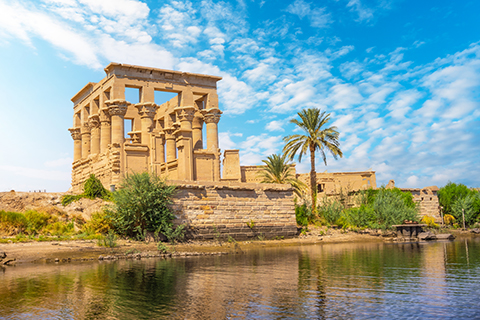
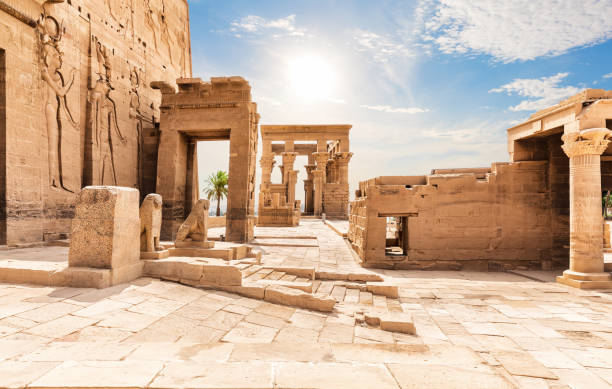
Today, you see the temple of Isis on the island of Philae, the center for the worship of the goddess Isis. It attracted pilgrims from all over the ancient world. One of the great temples of Egypt, it occupies about a quarter of the island and is the main temple on the island, with its huge, complete pylons and beautiful scenes. The temple is built in the same style as the temples of the New Kingdom. It also incorporates other elements, which appeared in the Greco-Roman period, such as the Mamisi (the House of the divine birth of Horus), and a Nilomete. The temple was submerged after the first Aswan Dam was built in 1906. The Unfinished Obelisk lies, in its original location, in a granite quarry in Aswan. It is 42 meters/138 feet in length and was most probably abandoned when some cracks appeared in the rock, during its construction. Had this obelisk been completed, it would have been the heaviest obelisk ever cut in Ancient Egypt, weighing nearly 1100 tons! It is believed that it was constructed and abandoned during the reign of Queen Hatshepsut of the 18th Dynasty. Afterwards, return to Aswan to visit the High Dam of Aswan, considered one of the most important achievements of the the last century in Egypt. For many years, it was a symbol of the New Era of the Revolution of 1952. It provides Egypt with water and electricity. Meals: Breakfast, Lunch & Dinner
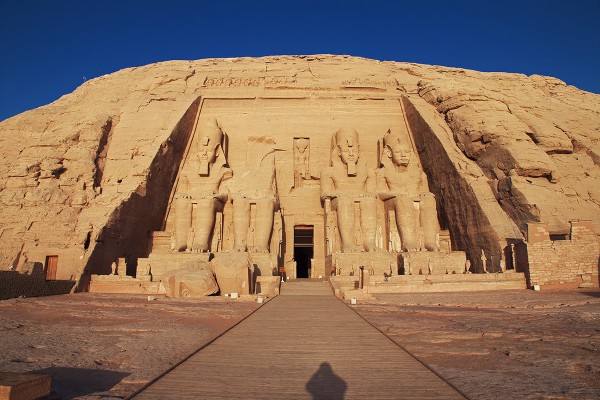
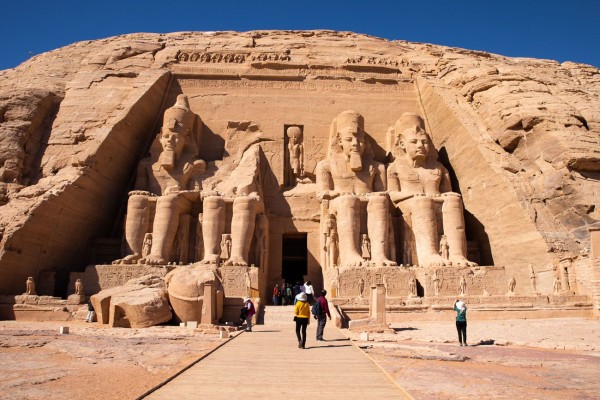
This morning, disembark your cruise ship for an early transfer to the airport to fly to Abu Simbel. (Optional) The temples of Abu Simbel are amongst the most interesting Pharaonic temples. Located close to the southern border with the Sudan, it is 280 kilometers/174 miles south of Aswan and consists of two, rock-cut temples, which both date back to the reign of King Ramses II (1290- 1223 BCE). Unfortunately, these unique temples suffered from the rising waters of Lake Nasser while the High Dam was being built. Return to Cairo, arrive Cairo transfer to your hotel for an overnight. Meals: Breakfast.
Today you will be transferred to the airport to take your international flight back home. Meals: Breakfast
Thoughtful thoughts to your inbox